
More Prebid bidders is not more revenue: how to find the ones costing you money
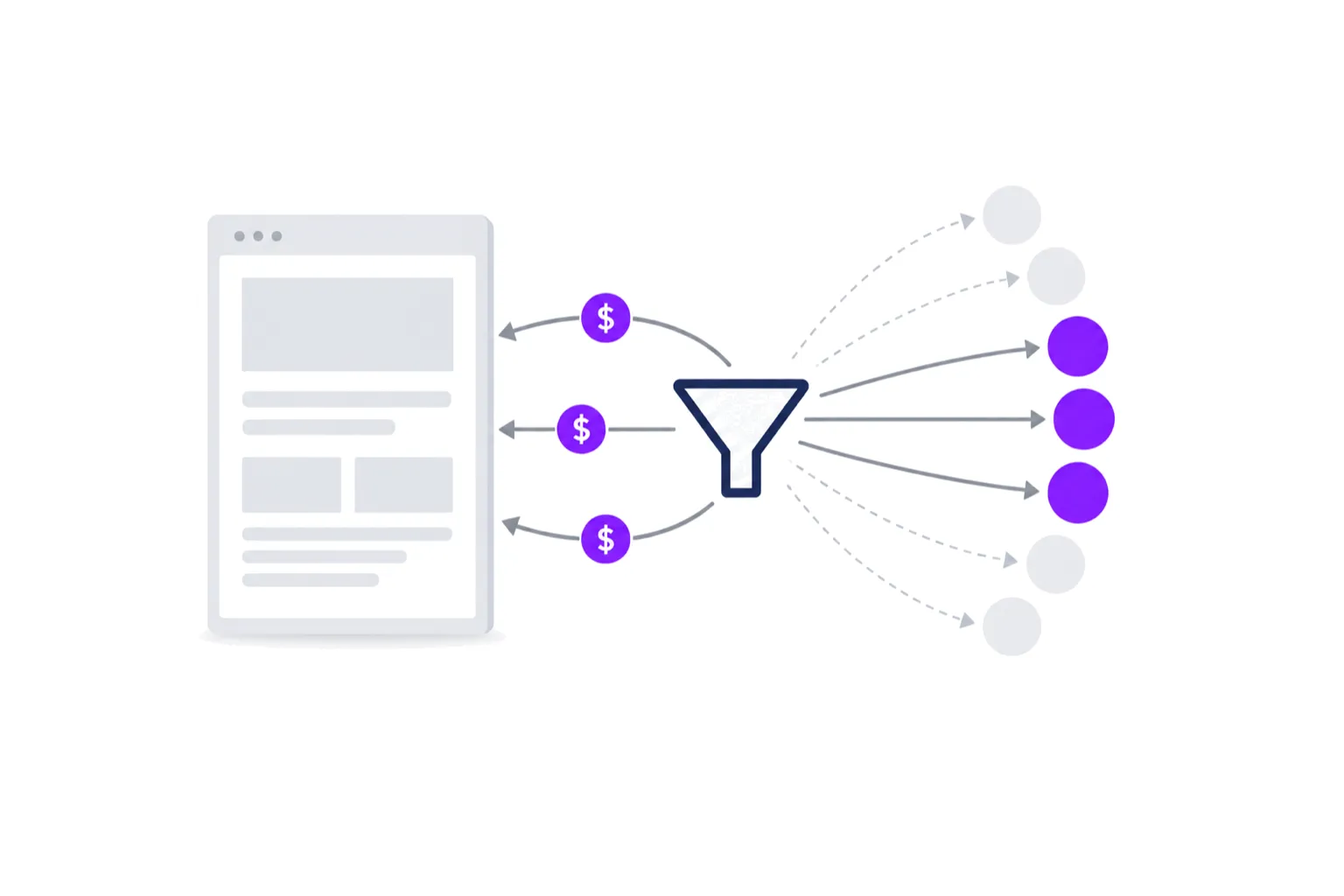
The usual pitch for header bidding is more competition: add bidders, raise the clearing price. Up to a point that is true. Past it, each extra bidder adds requests, page weight and latency, and brings in almost nothing.
We ran a 30-day analysis on one of the large news sites we monetize. Four of its bidders were responsible for 21.3% of all bid requests and 0.34% of revenue. We cut those four to 10% of traffic. Here is how to run the same analysis on your own setup, and why the answer is usually to throttle rather than delete.
Why idle bidders cost more than they seem
A bidder that never wins looks harmless in revenue reports. It isn't.
- Requests and page weight. Each client-side bidder is another network request per auction, and often a user sync iframe on top. On a mid-range phone that competes with your content for bandwidth and CPU.
- Latency. The auction waits for bidders up to the timeout. A slow bidder that rarely wins still makes every auction wait, or pushes you to a shorter timeout that cuts off bidders who do win.
- Browser connection limits. Browsers cap parallel connections per origin, and Prebid lets you set
maxRequestsPerOriginto stay under them. More bidders means more queuing. - Your reputation with SSPs. SSPs watch bid rate: the share of requests they actually bid on. A publisher that floods an SSP with requests it doesn't want tends to get throttled at the SSP's end, which can reduce bids on the inventory that does matter to them.
The numbers to pull
For each bidder, over at least 30 days so that weekly patterns wash out:
| Metric | What it tells you |
|---|---|
| Share of bid requests | How much of your auction traffic goes to this bidder |
| Bid rate | Bids returned per request. Low means the bidder mostly passes |
| Win rate | Impressions won per bid |
| Share of revenue | What the bidder actually earns you |
| Revenue per million requests | The fair comparison across bidders |
Revenue per million requests is the one that settles arguments. It normalizes for how much traffic each bidder gets, so a bidder that wins rarely but at high prices is not confused with one that wins rarely and cheaply.
Split it by device and country before deciding anything. A bidder with a poor global number can be your best payer on desktop traffic from one market.
Throttle before you remove
Our first step with the four low-value bidders was to send each one a random 10% of requests instead of removing them. That keeps three things you lose with a hard removal:
- A measurement. You still see what the bidder does on that 10%, so if its demand improves, you notice.
- The relationship. The SSP still has your inventory in its systems, and it is easier to scale back up than to onboard again.
- Protection against a mistake. If revenue per page view drops after throttling, the bidder was contributing something the analysis missed, usually on one format or segment. Scale it back and look closer.
Keep the random bucket stable per page view, so that a bidder is either in all the auctions on a page or in none of them. Otherwise refresh and lazy-load auctions on the same page see a different bidder set and the numbers get noisy.
Where it gets more interesting
A fixed 10% for a bidder is a blunt tool. The finer version predicts, for each auction, how likely each bidder is to bid, based on placement, country and operating system, and skips bidders below a threshold. Two guard rails matter if you try it: always leave a few bidders in every auction so that you never end up with an empty one, and keep a small exploration share so the model keeps seeing bidders it has learned to skip. Without exploration, a bidder that improves never gets the chance to show it.
What to expect
Trimming idle bidders rarely shows up as a big revenue jump. What you get is fewer requests per page, a faster auction, and room to lower the timeout or add a bidder that actually competes. On a site with millions of page views a day, a fifth fewer bid requests is also a real difference for the SSPs, which is what you want them to see before you talk about your next deal.
Want a second pair of eyes on your setup? Talk to the Valuad AdOps team.